
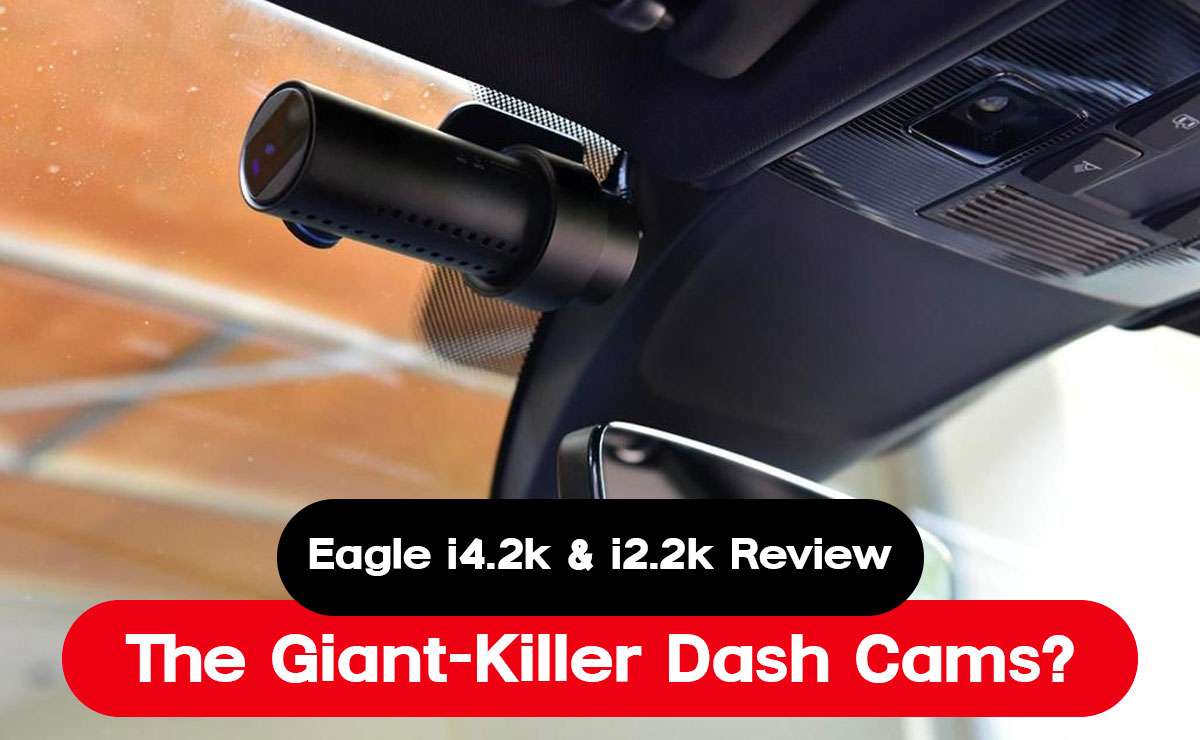
Let’s be honest: dash cams aren’t sexy. They’re not the shiny subwoofers or touchscreen head units that get your blood pumping. But when something goes sideways on the road, it’s the first bit of kit you’ll be glad you installed. Whether it’s a fender-bender or some clown brake-checking you on the M5, footage is everything.
And for the longest time, that peace of mind came with a heavy price tag — usually attached to the big-name brands like BlackVue or Thinkware. Don't get us wrong, they make great gear. But in 2025, are they still the only serious players in the game?
That’s where Eagle comes in. Specifically, their i4.2k and i2.2k dash cam systems. Aussie-designed, value-packed, and surprisingly polished, these units are quickly becoming a favourite around our workshop floor — and not just because they’re easier on the wallet.
We’ve had these installed in a few customer rides (and one of our own vans), so let’s break it all down.
First Impressions: Underdog with a Bite
Eagle's packaging is simple — nothing flashy, but clean and well thought-out. Inside, the cams are compact, solid, and don’t scream for attention, which is exactly what you want on your windscreen. They feel sturdy in-hand, with an almost OEM-style finish that blends nicely into most cars.
The i4.2k is their flagship: a dual-channel system with 4K resolution up front and 1080p in the rear. The i2.2k is a step down in resolution, with 2K (1440p) front and 1080p rear, but still more than enough for clear footage in most lighting.
Both come with:
-
Pre-installed microSD cards (nice touch). The i4.2k comes with 128GB and the i2.2k comes with 64GB.
-
Hardwiring kits included (no upsell surprises)
-
GPS built-in
-
Capacitor-based power (better heat resistance than battery-powered cams)
Straight up — not bad at all for the price.
Real-World Performance
Here’s the bit most spec sheets won’t tell you: how do they actually perform when you’re out and about?
We tested both units in a few different environments — city traffic, freeway hauls, backroads at night — and came away genuinely impressed.
Daytime Footage
The i4.2k is crystal clear. It punches out sharp, detailed footage that rivals (and in some cases exceeds) comparable BlackVue and Thinkware models. Number plates are easily legible at speed, and the dynamic range does a solid job handling sun glare and shadowy patches under trees.
The i2.2k, while a step down, still holds its own. You lose a bit of the fine detail — particularly at higher speeds — but for everyday urban driving, it’s more than serviceable.
Nighttime & Low Light
This is usually where budget cams fall apart.
But both Eagle models hold up surprisingly well. The i4.2k in particular uses a Sony Starvis sensor that gives it a decent boost in low-light performance. You still get that grainy night-time look (that’s physics), but visibility and number plate capture are consistent.
The i2.2k struggles a bit more in dark environments, especially without streetlights. It’s not unusable — far from it — but if night clarity is a big priority, the i4.2k is the better call.
App Experience & File Management
Eagle’s app is... fine. Not groundbreaking, but functional. You can:
-
Review and download footage (when you're connected to the camera via WiFi)
-
Adjust resolution, sensitivity, etc.
-
Check GPS data and driving speed (from recordings, not live)
-
Format your SD card without yanking it out
Compared to BlackVue’s slick app or Thinkware’s (occasionally clunky) ecosystem, Eagle sits somewhere in the middle. You won’t be raving about it, but it does the job without too much faffing about.
One thing we love? You’re not locked into proprietary viewing software on your PC. Just pull the SD card and use any standard media player — a massive win for people who want to keep it simple.
Reliability & Heat Resistance
This was a biggie for us — we install a lot of cams in work vehicles, utes, and rides that cop a beating in summer.
Eagle’s use of capacitors over lithium-ion batteries means they hold up better in Aussie heat. We’ve had units running daily through Sydney’s 40° scorchers with no shutdowns, no warping, no corrupted footage.
Add in a solid parking mode setup (motion detection and impact sensing) and you're looking at long-term reliability in both city and rural driving conditions.
Price vs Performance: Where Things Get Interesting
Alright, here’s where Eagle starts to pull away from the usual suspects.
Let’s talk rough numbers:
-
Eagle i4.2k: retails for $629 including the hardwiring kit and a 128GB mircoSD card.
-
Eagle i2.2k: retails for $529 including the hardwiring kit and a 64GB mircoSD card.
-
Thinkware U3000 (4K): retails above $1,000, and that’s before accessories
-
BlackVue DR900X (4K): north of $900, plus extra for cloud and GPS options
You're saving $300-$400+ straight out of the gate. And for most drivers, you're not really sacrificing performance unless you really want every bell and whistle.
Sure, Thinkware and BlackVue have cloud features, better apps, and a more polished ecosystem — and if you’re a fleet manager or Uber driver logging 60+ hours a week, that might matter. But for 90% of drivers? The Eagle gear just makes sense.
Where It Could Improve
It’s not all sunshine. A few things to note:
-
App interface could use refinement – It’s not buggy, but it’s a bit plain. Would love to see a more modern layout in future updates.
-
No cloud connectivity – If you're the kind of person who wants to check your car’s cams from halfway across the world, this isn’t the brand for you. Yet.
-
No built-in screen – Might be a turn-off for people who like seeing what’s recording live (though it does help keep the unit discreet and sleek). Although what we've found is cameras without a screen offer a more sleek and distraction free solution, so it's a give or take.
But honestly? These are nitpicks, not dealbreakers.
Who’s It For?
If you’re:
-
A daily commuter wanting peace of mind without breaking the bank
-
A tradie or delivery driver who needs reliable recording day in and day out
-
A first-time dash cam buyer looking for easy setup and strong performance
The Eagle i4.2k and i2.2k are some of the best bang-for-buck options out there.
If you’ve got the extra coin and want the sharpest footage with better night vision, go the i4.2k. If your budget’s tighter or you're not fussed about ultra-HD detail, the i2.2k will still get the job done — and then some.
Final Verdict
There’s a reason we’ve started recommending Eagle dash cams over some of the legacy brands: they just work.
They’re reliable, they’re locally backed, they punch above their weight, and they don’t come with the usual “tech tax” you get from the big overseas players. Are they perfect? No. But they’re damn close for the money.
BlackVue and Thinkware might still win on polish and premium features — but unless you need cloud monitoring, we’d argue Eagle’s actually the smarter choice for most Aussie drivers.
Verdict? These underdogs might just be the new top dogs.